Connect everything you have learned into a unified practice. Move from fragmented skills to integrated mastery, and build systems for continuous growth.
Beyond Isolated Skills
Throughout this workbook, we have explored distinct concepts: unfinished projects, learning through struggle, developer mindsets, mental models, ethical responsibility, AI partnership. Each chapter offered specific insights.
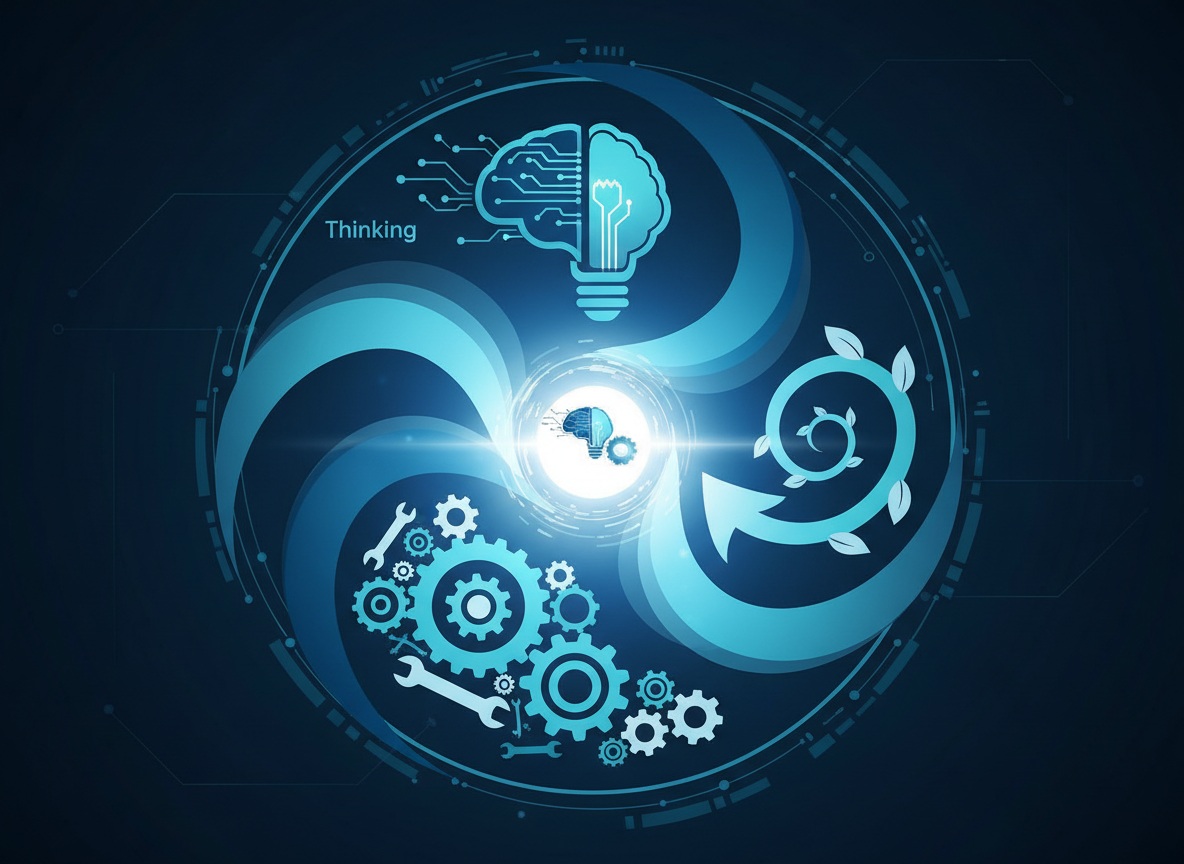
But the real transformation happens when these separate ideas connect - when thinking, building, and growing become one integrated practice rather than three separate activities.
Integration is the goal: Moving from collecting skills to developing a unified way of operating - a personal system for continuous innovation and growth.
The Three Pillars Revisited
Let us return to the fundamental pillars with fresh perspective.
Thinking
Thinking is not just planning - it is developing mental models, questioning assumptions, seeing systems, and recognising patterns. It is the foundation that guides everything else.
Integrated Thinking Practices
- Questioning before acting
- Mapping mental models
- Systems perspective on problems
- Ethical consideration built in
- Learning from failure
Building
Building is not just execution - it is translating thought into reality whilst maintaining quality, considering users, and creating sustainable systems. It is where ideas meet constraints.
Integrated Building Practices
- User-centred design
- Architectural thinking
- Quality through iteration
- Documentation as communication
- Responsible implementation
Growing
Growing is not just learning - it is deliberately developing capabilities, reflecting on experience, and evolving your practice. It is the continuous improvement that prevents stagnation.
Integrated Growth Practices
- Reflective practice
- Feedback integration
- Skill diversification
- Resilience development
- Teaching to deepen learning
How the Pillars Connect
The power comes not from the pillars individually, but from how they reinforce each other.
The virtuous cycle: Better thinking leads to better building. Building reveals gaps in thinking. Growth improves both thinking and building. Each pillar strengthens the others.
Thinking Informs Building
When you think deeply about problems, considering mental models and ethical implications, your building becomes more intentional. You create solutions that address real needs rather than surface symptoms.
Building Tests Thinking
Reality provides feedback that pure thought cannot. When you build, your assumptions face actual constraints. Gaps in your mental models become visible. This feedback refines future thinking.
Growing Enhances Both
As you grow through practice and reflection, both your thinking and building improve. You recognise patterns faster. You make better decisions. You produce higher-quality work.
Developing Your Personal System
Integration requires more than understanding - it requires building personal systems that make integrated practice natural rather than forced.
The Components of a Personal System
Building Your Operating System
- Thinking routines: Regular practices for reflection and planning
- Building workflows: Processes that incorporate quality and ethics
- Growth mechanisms: Systems for continuous learning
- Feedback loops: Ways to learn from outcomes
- Recovery processes: How to bounce back from setbacks
Start Small, Build Incrementally
Do not try to implement everything at once. Start with one practice from each pillar. Make them habitual. Then add another. Build your personal system gradually.
Sustainable integration: Better to maintain three solid practices than abandon twenty ambitious ones. Start small. Build gradually. Let habits compound.
From Individual to Team Integration
Personal integration is powerful. Team integration is transformative. When entire teams operate with integrated thinking, building, and growing, capability multiplies.
Characteristics of Integrated Teams
- Shared mental models: Common understanding of problems and approaches
- Collective learning: Growth through collaboration
- Quality culture: Excellence as standard, not exception
- Psychological safety: Freedom to experiment and fail
- Continuous improvement: Regular reflection and refinement
Recognising Integration
How do you know when you have achieved integration? Look for these signs:
Signs of Integrated Practice
- You naturally consider multiple perspectives
- Ethical concerns arise automatically, not as afterthoughts
- You see connections others miss
- Quality comes naturally rather than requiring extra effort
- You recover quickly from setbacks
- Learning happens continuously, not episodically
- Work feels more coherent and purposeful
The Integration Challenge
Integration is not easy. It requires sustained effort. Common challenges include:
- Fragmentation pressure: Modern work encourages specialisation over integration
- Time constraints: Integration takes time that feels scarce
- Immediate rewards: Integrated benefits are long-term, not immediate
- Complexity: Holding multiple perspectives is mentally demanding
Worth the effort: Despite challenges, integrated practitioners consistently outperform specialists over time. They adapt faster, make better decisions, and create more sustainable solutions.
Practical Exercises: Building Integration
Exercise 1: Pillar Assessment
Rate yourself 1-10 on each pillar: Thinking, Building, Growing. For each, identify specific strengths and gaps. Which pillar needs most attention? Create a balanced development plan.
Exercise 2: Connection Mapping
Choose a recent project. Map how thinking informed building, how building tested thinking, and how growing enhanced both. Where were connections strong? Where were they weak? How can you strengthen integration next time?
Exercise 3: Personal System Design
Design your personal operating system. Choose one practice from each pillar to implement this month. Define when, how, and how you will track them. Start small. Build habits first.
Exercise 4: Integration Audit
Review the signs of integrated practice. Which do you exhibit? Which are absent? For missing signs, identify specific practices that would develop them. Create an integration improvement plan.
Exercise 5: Team Integration Assessment
If you work on a team, assess team integration. Do you share mental models? Learn collectively? Have psychological safety? Where is the team strong? Where could integration improve? Design one team practice to enhance integration.
Coming Up Next: In the final section, we bring everything together into your personal path forward - creating a sustainable practice for lifelong innovation and growth.