Tools for Deep Work: Engineering Your Environment for Focus
Practical tools and resources to reduce friction, eliminate distractions, and support your descent into deep concentration.
You've learned the neuroscience. You understand why your brain resists deep work, how the default mode network and task-positive network compete for resources, and why that descent into focus feels so hard.
Now comes the practical part: engineering your environment to make deep work easier. These aren't magic solutions—no product can do the cognitive heavy lifting for you. But the right tools can remove friction, eliminate distractions, and create conditions that make descending into flow less painful.
Each recommendation below is chosen specifically to address one of the barriers we discussed in the main article.
Eliminate Auditory Distractions
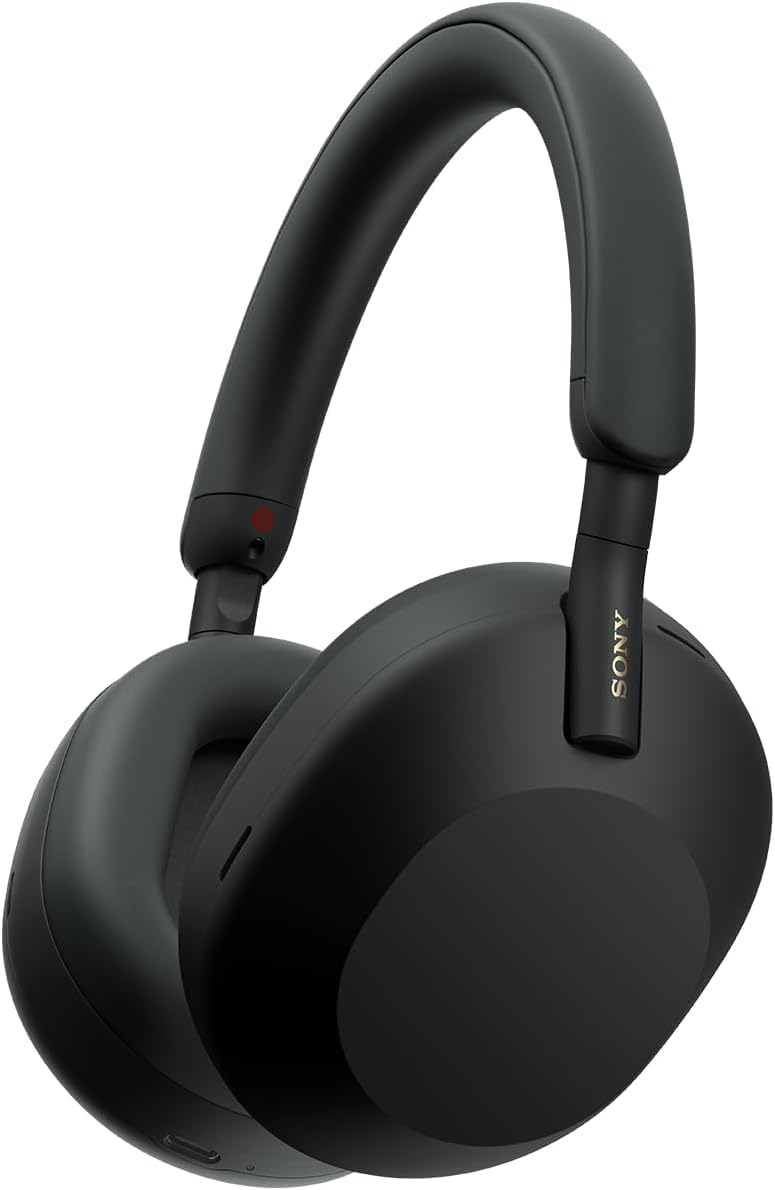
Sony WH-1000XM5 Noise Cancelling Headphones
Remember how visual clutter activates your orienting response and pulls you back to default mode? Audio distractions do the same thing—only worse. Every conversation snippet, keyboard click, or door slam is a potential context switch that costs you metabolic energy to recover from.
Premium noise cancellation doesn't just block sound; it protects your prefrontal cortex from having to constantly filter out environmental noise. The four-mic system eliminates unwanted sound more accurately than cheaper options, and the 30-hour battery means you won't lose protection mid-session.
Best for: Open offices, shared workspaces, or anywhere auditory interruptions are constant.
Award-winning wireless headphones with premium noise cancellation. 30-hour battery life, crystal-clear call quality, Hi-Res Audio support. Includes hard case. Available in Black, Silver, Midnight Blue, and Smoky Pink.
View on AmazonTime Structure & Rituals

Rotation Pomodoro Timer (5/10/25/45 Minutes)
We discussed how ritual lowers the activation energy for entering deep work. A physical timer creates a tangible boundary between shallow and deep mode—flip it to start, and your brain learns "we're shifting gears now."
The visual countdown serves a second purpose: it externalizes time tracking so your prefrontal cortex doesn't have to spend glucose monitoring the clock. That's cognitive load you can redirect toward the actual work.
The ability to save custom presets (not just standard Pomodoro intervals) lets you match timer duration to your actual deep work capacity. Beginners might start with 25-minute sessions; experts can build up to 45 or 90 minutes.
Best for: Building the ritual of timed deep work sessions and externalizing time awareness.
Flip-to-start visual countdown timer with preset intervals (5/10/25/45 min) plus 4 customizable settings. USB-C rechargeable, up to 100 days battery. Silent or buzzer mode. Pocket-sized for portability.
View on AmazonEnvironmental Control

Philips Hue White Ambiance Smart Bulbs (Twin Pack)
Lighting affects your brain's circadian rhythm and alertness. Cool, bright white light (5000K+) signals "daytime" to your prefrontal cortex and increases alertness—exactly what you want when entering deep work.
The ability to dim to warm tones (2700K) later in the day helps signal wind-down time, protecting your sleep quality. Remember: glucose and sleep aren't optional for deep work capacity. Poor sleep destroys your prefrontal cortex function the next day.
Smart scheduling means one less decision to make. Set cool/bright for morning deep work blocks, warm/dim for evening. Automate it and forget it.
Best for: Creating consistent lighting cues that support focus without manual adjustment.
1100 lumens (75W equivalent), 50,000 shades of tuneable white light. Works with Alexa, Google Assistant, Apple HomeKit. Bluetooth-enabled out of box (Bridge optional for full home control). B22 Bayonet Cap fitting.
View on AmazonEssential Reading: The Source Material

Deep Work: Rules for Focused Success in a Distracted World
Cal Newport's book is the definitive guide to cultivating deep work as a practice. While our article covered the neuroscience, Newport's book provides the complete framework: how to schedule deep work, how to quit social media strategically, how to train your concentration like a muscle, and how to make depth a career advantage.
This isn't generic productivity advice. It's a systematic approach to reclaiming cognitive capacity in an economy designed to fragment your attention. If you're serious about making deep work a core skill, this is the manual.
Best for: Anyone ready to commit to deep work as a long-term practice, not just a technique.
The seminal work on focused attention in the modern economy. Newport provides cultural criticism, memorable case studies, and actionable strategies for developing deep work as a sustainable practice.
View on Amazon
Flow: The Psychology of Happiness
Mihaly Csikszentmihalyi's research is the foundation for understanding flow states—that feeling when deep work stops being painful and becomes deeply satisfying. He studied thousands of people to identify what makes experience genuinely worthwhile.
While Newport tells you how to do deep work, Csikszentmihalyi explains why it matters beyond productivity. Flow isn't just about getting more done; it's about the quality of consciousness itself. Understanding this can shift your motivation from external goals (productivity) to intrinsic satisfaction (the work itself).
Best for: Understanding the psychological rewards of deep concentration and how to structure activities for optimal experience.
The classic work on happiness and optimal experience. Two decades of research into what makes life worthwhile, with insights on learning, relationships, creativity, and how to make free time meaningful.
View on Amazon
Atomic Habits: Tiny Changes, Remarkable Results
James Clear's framework is perfect for building the systems around deep work. We know deep work capacity builds like a muscle, but how do you actually create the habit? How do you make it automatic rather than a daily willpower battle?
Clear's concepts—habit stacking, environment design, the Two Minute Rule—are directly applicable to establishing deep work routines. If Cal Newport is the "what" and "why" of deep work, James Clear is the "how" of making it stick.
Best for: Building sustainable systems that make deep work a default behavior rather than an exception.
Over 25 million copies sold. Discover how tiny behavioral changes compound into life-altering outcomes. Includes habit stacking, environment design, and psychological insights on motivation and consistency.
View on AmazonVisual Planning & Organization

Amazon Basics Desktop Dry Erase Whiteboard
Remember the concept of "leaving breadcrumbs for your future shallow self"? A desktop whiteboard serves as external working memory. Before you descend into deep work, you can offload your plan, key constraints, or problem structure onto the board.
When you emerge from flow and your expanded working memory collapses, the whiteboard shows you what your deep-state self was thinking. This reduces the cognitive cost of resuming work after a break.
The built-in organizer also reduces visual clutter on your desk—and as we discussed, visual clutter activates the orienting response that pulls you out of task-positive mode.
Best for: Externalizing problem structure and maintaining clean workspace organization.
15.8" x 6.8" tempered glass writing surface with organizer underneath. Includes 3 dry erase markers and eraser. Non-slip feet. Extra slot for tablet/phone. Keeps desk clean while providing quick-access planning space.
View on AmazonA final note on tools: None of these products will do the hard work for you. The descent into deep focus will still feel uncomfortable. Your brain will still resist. The metabolic cost will still be real.
What these tools do is remove unnecessary friction. They eliminate the distractions that make descent harder than it needs to be. They create environmental cues that support your intentions rather than sabotage them.
The rest—the actual cognitive heavy lifting—that's on you. And it always will be. But at least now you're fighting the right battle: your brain's natural resistance to depth, not a poorly designed environment making it worse.